The Economic Impact of the FIFA World Cup 2026
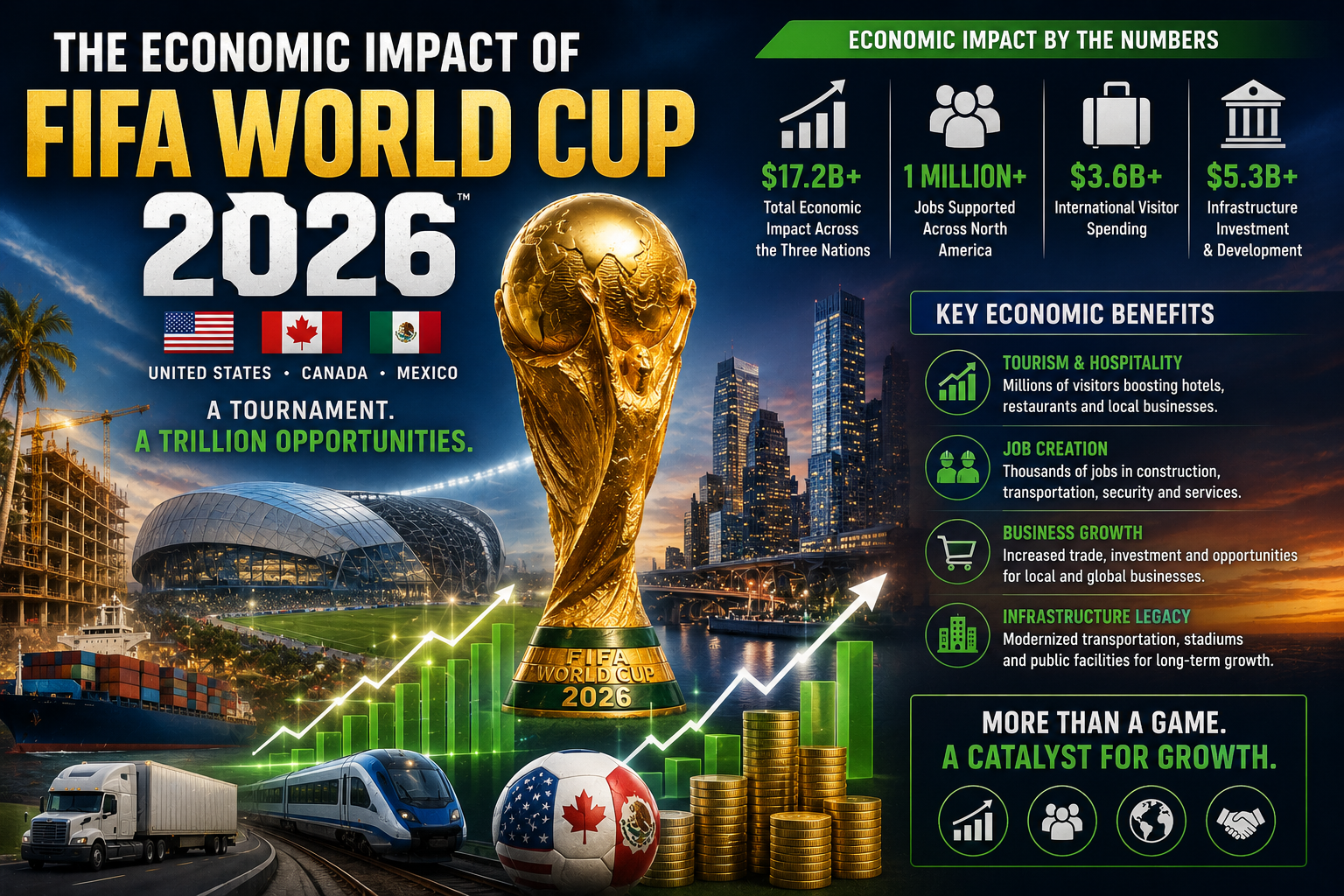
The FIFA World Cup 2026 is expected to become one of the most significant sporting events in modern history. Hosted jointly by the United States, Canada, and Mexico, the tournament will bring together millions of football fans from around the world. Beyond the excitement of the matches, the World Cup will also create enormous economic opportunities for the host countries. From tourism and infrastructure development to job creation and international trade, the tournament is likely to have a far-reaching economic impact on both local communities and the global economy.
One of the most direct economic benefits of the FIFA World Cup 2026 is the growth of tourism. Millions of international visitors are expected to travel to the host cities to watch matches and experience the culture of North America. These tourists will spend money on hotels, restaurants, transportation, shopping, and entertainment. As a result, local businesses will enjoy increased sales and higher profits during the tournament period. Cities such as New York, Los Angeles, Toronto, and Mexico City are likely to experience a major boost in their tourism industries. In addition, the global exposure from the World Cup may encourage more visitors to return in the future, creating long-term benefits for the tourism sector.
Another important economic effect is the creation of jobs. Hosting such a massive event requires a large workforce in many different industries. Temporary jobs will be created in construction, security, transportation, hospitality, and event management. Thousands of workers will be needed to prepare stadiums, improve roads, operate airports, and provide services to visitors. Although many of these positions are temporary, they can still reduce unemployment and provide valuable work experience for local residents. Furthermore, some infrastructure projects may create permanent employment opportunities even after the tournament ends.
Infrastructure development is another key advantage of hosting the FIFA World Cup 2026. Governments and private investors are expected to spend billions of dollars upgrading stadiums, public transportation systems, airports, and communication networks. These improvements will not only support the tournament but also benefit local communities in the future. Better transportation and modern facilities can improve the quality of life for residents and make cities more attractive to investors and tourists. For example, improved airports and train systems may increase business activity and strengthen regional economic growth long after the World Cup is over.
The World Cup can also stimulate international trade and investment. Since the tournament receives global media attention, companies from around the world will seek advertising and sponsorship opportunities. Major international brands will invest heavily in marketing campaigns connected to the event. This increased business activity can strengthen economic cooperation among countries and encourage foreign investment in the host nations. In particular, small and medium-sized businesses may gain international recognition through partnerships and tourism-related services.
However, despite these economic benefits, hosting the FIFA World Cup also involves significant costs and risks. Organizing such a large event requires enormous financial investment. Governments may spend billions of dollars on stadium construction, security, transportation, and public services. If the expenses are not carefully managed, taxpayers may bear a heavy financial burden. Some previous World Cup host countries experienced economic difficulties because newly built stadiums became underused after the tournament. Therefore, proper planning is essential to ensure that investments continue to benefit society in the long term.
Another challenge is the possibility of inflation and rising living costs during the tournament. Increased demand for accommodation, transportation, and food may lead to higher prices in host cities. Local residents, especially low-income families, may face financial pressure as daily expenses rise. In addition, some small businesses may struggle to compete with large international corporations that dominate the market during the event. As a result, governments must develop policies that protect local communities while still encouraging economic growth.
Environmental concerns may also affect the economic impact of the FIFA World Cup 2026. Large-scale international travel and construction projects can increase carbon emissions and environmental damage. To address these issues, the host countries must invest in sustainable technologies and environmentally friendly transportation systems. If successful, the World Cup could promote green development and encourage future sporting events to adopt more sustainable practices.
In conclusion, the FIFA World Cup 2026 will have a powerful economic impact on the United States, Canada, and Mexico. The tournament is expected to increase tourism, create jobs, improve infrastructure, and attract international investment. At the same time, it also presents financial and environmental challenges that require careful management. If the host countries plan wisely and invest responsibly, the World Cup can leave a positive economic legacy that continues long after the final match is played. Ultimately, the FIFA World Cup 2026 will demonstrate how sports can influence not only culture and entertainment but also the global economy.