Favorites to Win the FIFA World Cup 2026
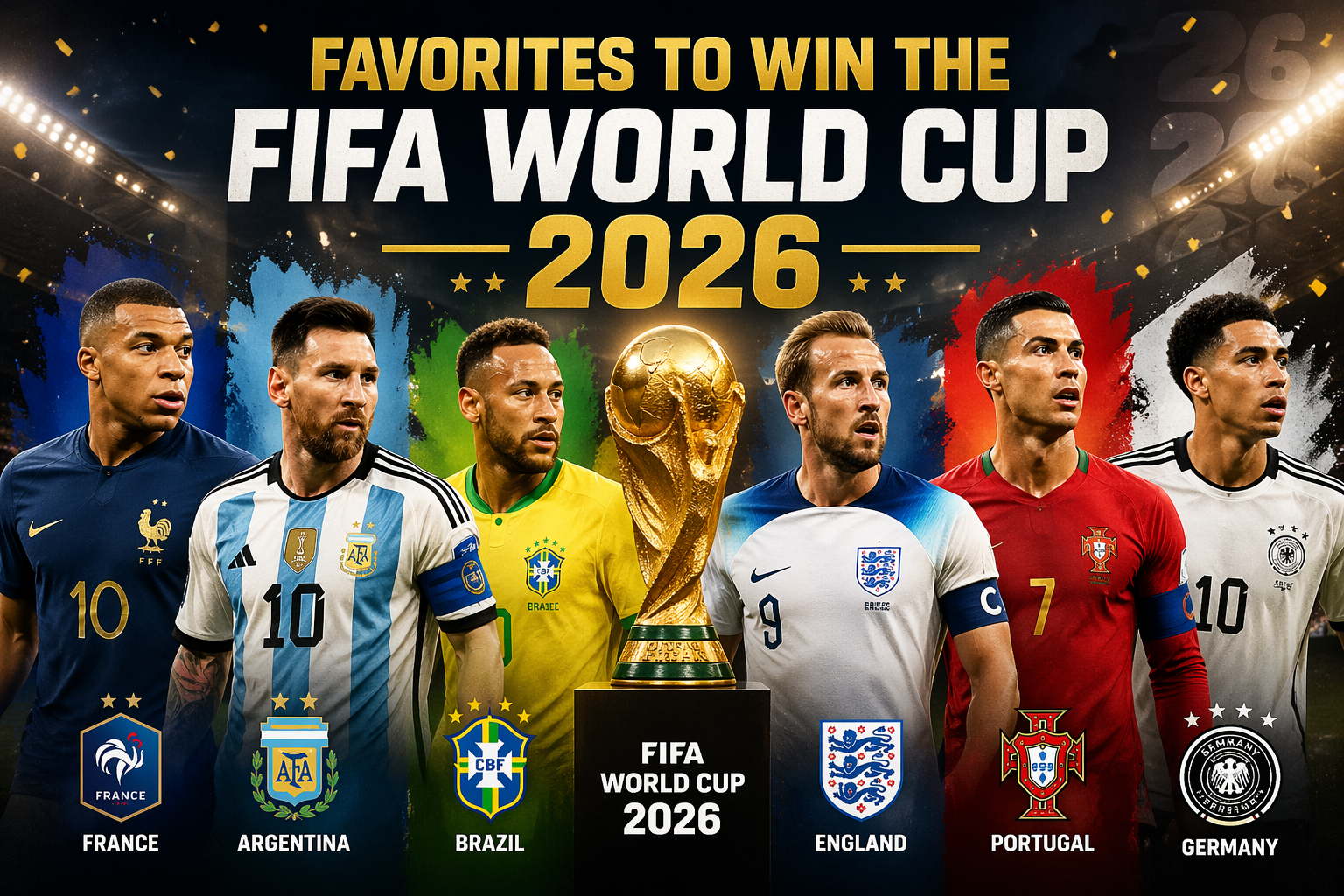
The FIFA World Cup 2026 stands as the pinnacle of international football, captivating billions of viewers and uniting nations through a shared passion for the sport. As the tournament approaches, speculation surrounding potential champions intensifies, with analysts and fans alike attempting to identify the teams most likely to lift the coveted trophy. While football is inherently unpredictable, a careful evaluation of recent performances, squad depth, tactical sophistication, and psychological resilience can provide valuable insight into the leading contenders.
Foremost among the favorites is Brazil, a nation synonymous with footballing excellence. Renowned for its rich legacy and flair-driven style, Brazil consistently produces world-class talent across all positions. The current squad combines technical brilliance with tactical maturity, enabling them to adapt to various styles of play. Their attacking prowess, supported by dynamic midfield transitions and a solid defensive structure, renders them a formidable opponent. Moreover, Brazil’s historical success in the tournament contributes to a winning mentality that often proves in high-pressure situations.
Equally compelling is France, widely regarded as one of the most balanced teams in modern football. As recent champions, they possess invaluable experience in navigating the complexities of a World Cup campaign. Their squad depth is arguably unmatched, with elite players available in every position, allowing for tactical flexibility and effective rotation. France’s ability to seamlessly blend youthful exuberance with seasoned leadership enhances their consistency, while their physicality and strategic discipline make them exceptionally difficult to overcome.
Argentina also emerges as a strong contender, driven by a renewed sense of unity and purpose. In recent years, the team has demonstrated significant tactical evolution, emphasizing cohesion and collective responsibility. Their midfield control and defensive organization have improved markedly, complementing their traditionally creative attacking play. Furthermore, Argentina benefits from a deep emotional connection with the tournament, often channeling national pride into inspired performances. Such intangible factors can play a crucial role in determining outcomes at the highest level.
In addition to these traditional powerhouses, European giants such as England and Germany warrant serious consideration. England has made notable progress in recent tournaments, displaying tactical discipline and a growing sense of confidence. Their squad features a blend of emerging talents and experienced players, capable of executing complex game plans. Germany, on the other hand, is renowned for its efficiency and resilience. Despite occasional setbacks, their systematic approach and emphasis on teamwork often enable them to peak at the right moment.
Nevertheless, it would be imprudent to overlook the potential impact of so-called “dark horses.” Teams such as Portugal, the Netherlands, or even emerging footballing nations have demonstrated the capacity to challenge established hierarchies. The expanding competitiveness of international football means that the margin between victory and defeat is increasingly narrow. A single moment of brilliance—or error—can dramatically alter the trajectory of a tournament.
Another critical factor influencing the outcome is the role of management. Tactical acumen, adaptability, and decision-making under pressure are essential attributes for success. Coaches must not only devise effective strategies but also foster team cohesion and maintain morale throughout the competition. In a tournament characterized by intense schedules and high stakes, psychological resilience becomes as important as technical ability.
In conclusion, while Brazil, France, and Argentina appear to be the leading favorites based on current form and historical pedigree, the FIFA World Cup 2026 remains inherently unpredictable. The interplay of skill, strategy, and circumstance ensures that no outcome can be guaranteed. It is precisely this uncertainty that underpins the tournament’s enduring appeal. Regardless of which team ultimately emerges victorious, the World Cup will undoubtedly deliver moments of drama, inspiration, and sporting excellence that resonate far beyond the confines of the pitch.