The History of the FIFA World Cup
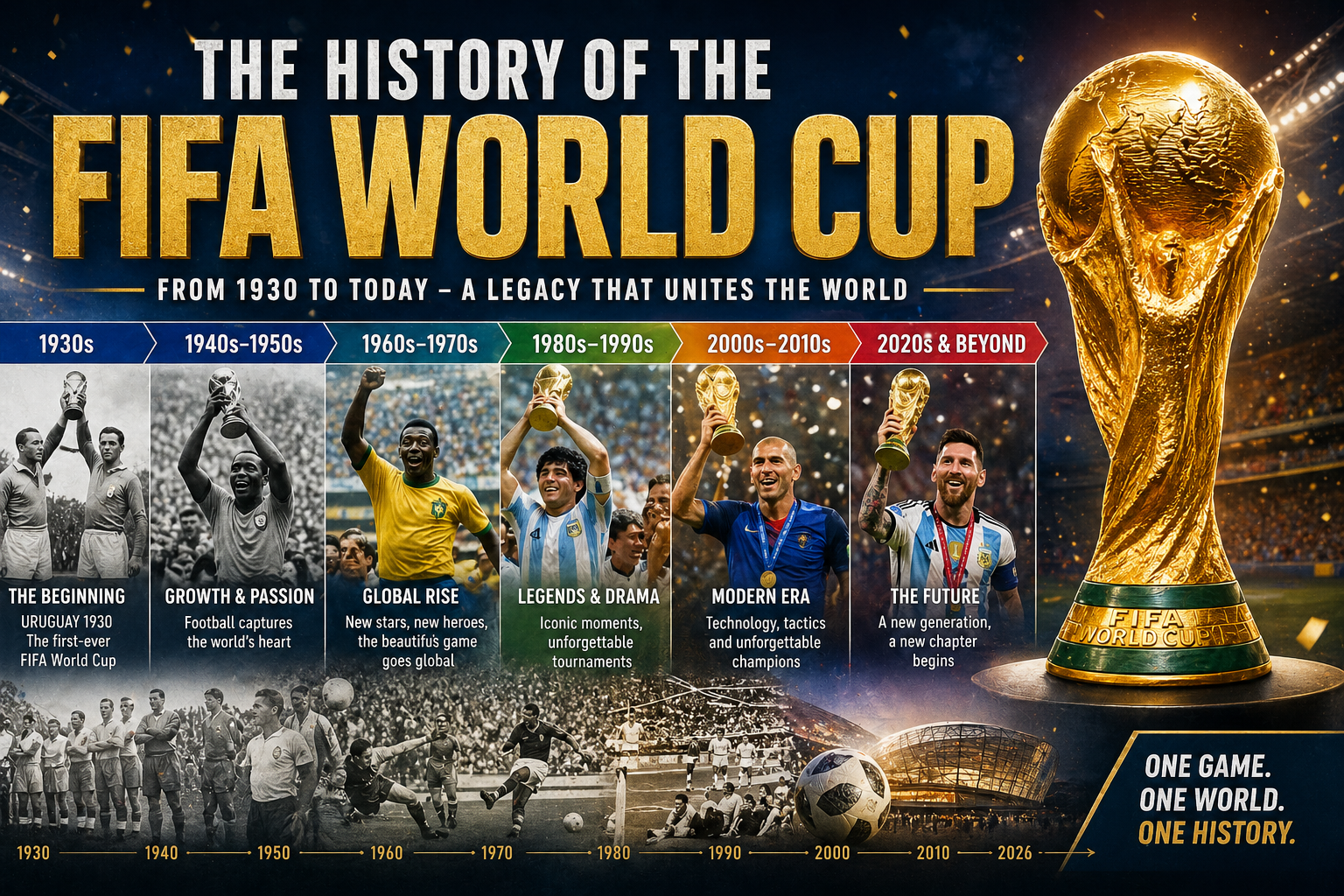
The FIFA World Cup is the most prestigious tournament in international football and one of the most widely watched sporting events in the world. Its history reflects not only the evolution of the sport itself but also broader social, political, and cultural changes across the globe. Since its inception in 1930, the World Cup has grown from a small competition into a global phenomenon that unites millions of fans every four years.
The idea of an international football tournament began in the early 20th century. Before the World Cup, football was played in the Olympic Games, but it was limited to amateur players. As football gained popularity, there was a growing demand for a professional international competition. In 1930, the Fédération Internationale de Football Association (FIFA) organized the first World Cup in Uruguay. Uruguay was chosen as the host nation because it had won two Olympic gold medals and was celebrating its centenary of independence. Only 13 teams participated, and Uruguay emerged as the first champion after defeating Argentina in the final.
The tournament faced significant challenges in its early years. The 1934 and 1938 tournaments were held in Europe, but the outbreak of World War II led to the cancellation of the 1942 and 1946 editions. The World Cup resumed in 1950 in Brazil, marking a new era for international football. This tournament is remembered for the shocking defeat of Brazil by Uruguay in the final match, an event often referred to as the “Maracanazo.”
As the tournament continued, it expanded in both size and popularity. In 1954, the World Cup introduced television broadcasting, allowing fans around the world to watch matches for the first time. The number of participating teams gradually increased, reflecting the growing global reach of football. By 1982, the tournament had expanded to 24 teams, and in 1998, it further increased to 32 teams. Starting from 2026, the World Cup is set to include 48 teams, making it even more inclusive and competitive.
Several countries have left a lasting mark on the history of the World Cup. Brazil is the most successful team, having won the tournament five times. Other dominant teams include Germany and Italy, each with four titles. Argentina and France have also achieved significant success in recent decades. Legendary players such as Pelé, Diego Maradona, and Lionel Messi have become global icons through their performances in the World Cup, inspiring generations of football fans.
The World Cup has also been a stage for unforgettable moments and dramatic matches. From stunning goals to unexpected upsets, the tournament consistently delivers excitement and emotion. For example, the 1966 World Cup saw England win its first and only title, while the 2014 tournament in Brazil featured Germany’s historic 7–1 victory over Brazil in the semifinals. These moments have become part of football folklore and contribute to the tournament’s enduring appeal.
Beyond the sport itself, the World Cup has significant cultural and economic impacts. Host countries often invest heavily in infrastructure, including stadiums, transportation, and tourism facilities. While hosting the tournament can boost a nation’s global image and economy, it can also lead to challenges such as high costs and social concerns. Nevertheless, the World Cup remains a symbol of international unity, bringing together people from different backgrounds to celebrate their shared love of football.
In recent years, technology has played an increasingly important role in the tournament. Innovations such as goal-line technology and the Video Assistant Referee (VAR) system have been introduced to improve fairness and accuracy in decision-making. These advancements reflect the ongoing evolution of the game and FIFA’s efforts to adapt to modern demands.
In conclusion, the history of the FIFA World Cup is a story of growth, resilience, and global connection. From its humble beginnings in 1930 to its current status as a worldwide spectacle, the tournament has become an integral part of sports culture. As it continues to evolve, the World Cup will undoubtedly remain a source of inspiration, excitement, and unity for generations to come.